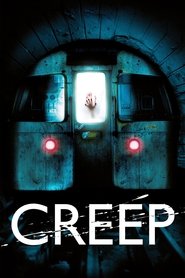
“Creep” is a horror-thriller film about a woman who gets trapped in a London subway station with a deformed man. She must fight for her survival against this dangerous creature, who represents the dark and sinister side of humanity. The film uses claustrophobic settings and tense pacing to create an atmosphere of suspense and terror. It’s a visceral and intense movie that will keep you on the edge of your seat until the very end.
CLICK HERE🡇🡇🡇📽️_Watch Creep 2004 English Subtitles_
Review
Rising from the Deep: The Creep in All of Us
I have a confession to make. I’m a creep. No, not the Radiohead song, although it does capture some of my moods… What I mean is that I have a fascination with creeps, those uncanny and unsettling individuals who disturb our sense of normalcy and safety. I don’t seek them out or endorse their behavior, but I find them intriguing as cultural phenomena, psychological puzzles, and artistic subjects. That’s why when I heard about the movie Creep, directed by Patrick Brice and co-written by him and Mark Duplass, I couldn’t resist watching it.
Creep tells the story of Aaron (Brice), a struggling filmmaker who answers a Craigslist ad from Josef (Duplass), a man who wants to hire him for a day to film him for his unborn son. Aaron agrees reluctantly and drives to an isolated cabin in the woods where Josef lives with his dogs. At first glance, Josef seems friendly but odd, prone to sudden mood swings and weird jokes. Aaron tries to ignore his unease and do his job, but as the day unfolds and he learns more about Josef’s past and intentions, he realizes that he may be in danger.
The movie belongs to the found footage horror genre, which means that it uses shaky camera shots, minimal production values, naturalistic acting styles, and improvised dialogue to simulate an authentic documentary or home video feel. This approach has become popular since The Blair Witch Project (1999) set the standard for low-budget scares that rely more on suggestion than spectacle. However, Creep differs from many found footage movies by subverting some of their conventions and expectations.
For instance, Aaron is not an idiotic protagonist who ignores obvious signs of danger or behaves recklessly to increase suspense or thrills. On the contrary, he’s aware of his vulnerability and tries to be rational and cautious. He also has a likable personality that makes us empathize with him and hope he survives. Josef, too, is not a typical horror villain who wears a mask, wields a weapon, or has supernatural powers. He’s an ordinary guy who seems harmless or sympathetic at times, which adds to the creepiness and confusion of his behavior. Duplass’s performance is superb, ranging from charming to creepy to menacing without losing credibility or coherence.
Another strength of Creep is its script, which balances humor and horror, sympathy and suspicion, surprises and revelations. The dialogue feels authentic yet polished, as if Brice and Duplass had rehearsed their lines but also allowed themselves to improvise or react spontaneously to each other’s cues. The story unfolds in real time but doesn’t feel rushed or slow, as the pacing varies according to the context or the mood. Some scenes are hilarious (e.g., the bathtub sequence), some are suspenseful (e.g., the chase in the maze), some are poignant (e.g., the tape confession), and some are disturbing (e.g., the peachfuzz mask). Overall, Creep manages to engage our minds and emotions while keeping us on edge.
Of course, not everyone may appreciate Creep’s style or substance. Some viewers may find it too slow-paced for a horror movie or too quirky for a drama-comedy hybrid. Others may find it too predictable or implausible in certain parts. Some may dislike how it portrays mental illness or abuse as plot devices rather than nuanced themes. However, I think that Creep succeeds in what it aims to do: create an unsettling atmosphere that mirrors our fears of being watched, manipulated, violated by someone close yet distant from us.
Creep also benefits from its music score by Kyle Field and Eric D.Johnson of The Fruit Bats fame. The score adds texture and tension to the movie without overwhelming it or distracting us from the action. The sound design, too, enhances the sensory experience by using ambient noises, silence, and sudden bursts of loudness to create contrasts and surprises.
Creep has spawned two sequels, Creep 2 (2017) and Creep 3 (in development), which continue the story of Josef and his victims in new ways. I haven’t watched them yet, but I’m curious to see how they expand or subvert the original premise. I’m also curious to learn more about Brice and Duplass’s creative process, how they conceived and executed Creep with minimal resources and maximum impact.
In conclusion, Creep is a movie that creeps up on you slowly but surely, like a spider weaving its web around you. It’s not for everyone, but if you’re open to a different kind of horror or humor that challenges your expectations and assumptions, give it a try. Who knows? You may discover some creeps in yourself as well as in others. As Brené Brown once said: “Owning our story can be hard but not nearly as difficult as spending our lives running from it.” Let Creep help you face your fears and embrace your quirks.
Technical Data
- Runtime : 85
- Release : 2004-08-10
- Genre : Horror, Thriller, Mystery
- Cast : Franka Potente as Kate, Sean Harris as Craig, Vas Blackwood as George, Ken Campbell as Arthur, Jeremy Sheffield as Guy
- Crew : Robert Jones as Executive Producer, Emma Field-Rayner as Set Decoration, Gary Dodkin as Boom Operator, Kate Evans as Editor, Christopher Smith as Screenplay
- Popularity 15.173
- Budget : 0
- Revenue : 0
- Company : UK Film Council, Zero Film GmbH, Dan Films
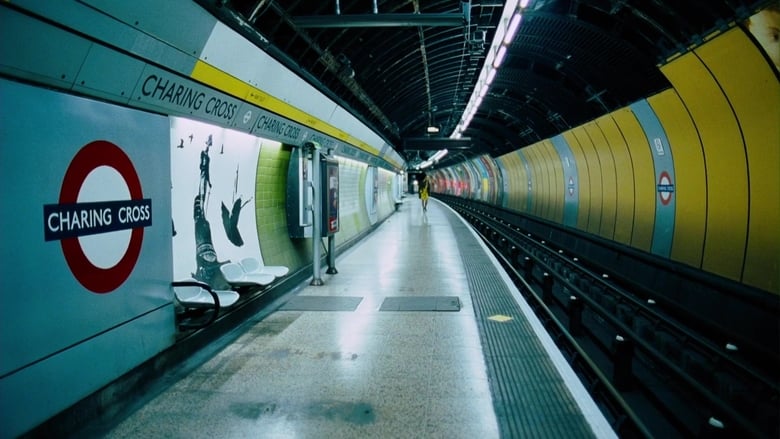
- Summary : Trapped in a London subway station, a woman who’s being pursued by a potential attacker heads into the unknown labyrinth of tunnels beneath the city’s streets
- Tagline : Your journey terminates here
